Disposable vapes often end up in landfill while their lithium-ion batteries still retain significant usable capacity. This project aimed to repurpose these 18450 cells into a practical and portable battery pack for powering camping lights and potentially charging other devices.
While the first prototype succeeded for lighting use, attempts to boost the 3.7V pack voltage to 5V for phone charging were unreliable. A key lesson was the importance of building a 2S system (~7.4V) for sufficient headroom in regulated output applications.
🛠️ Construction Process
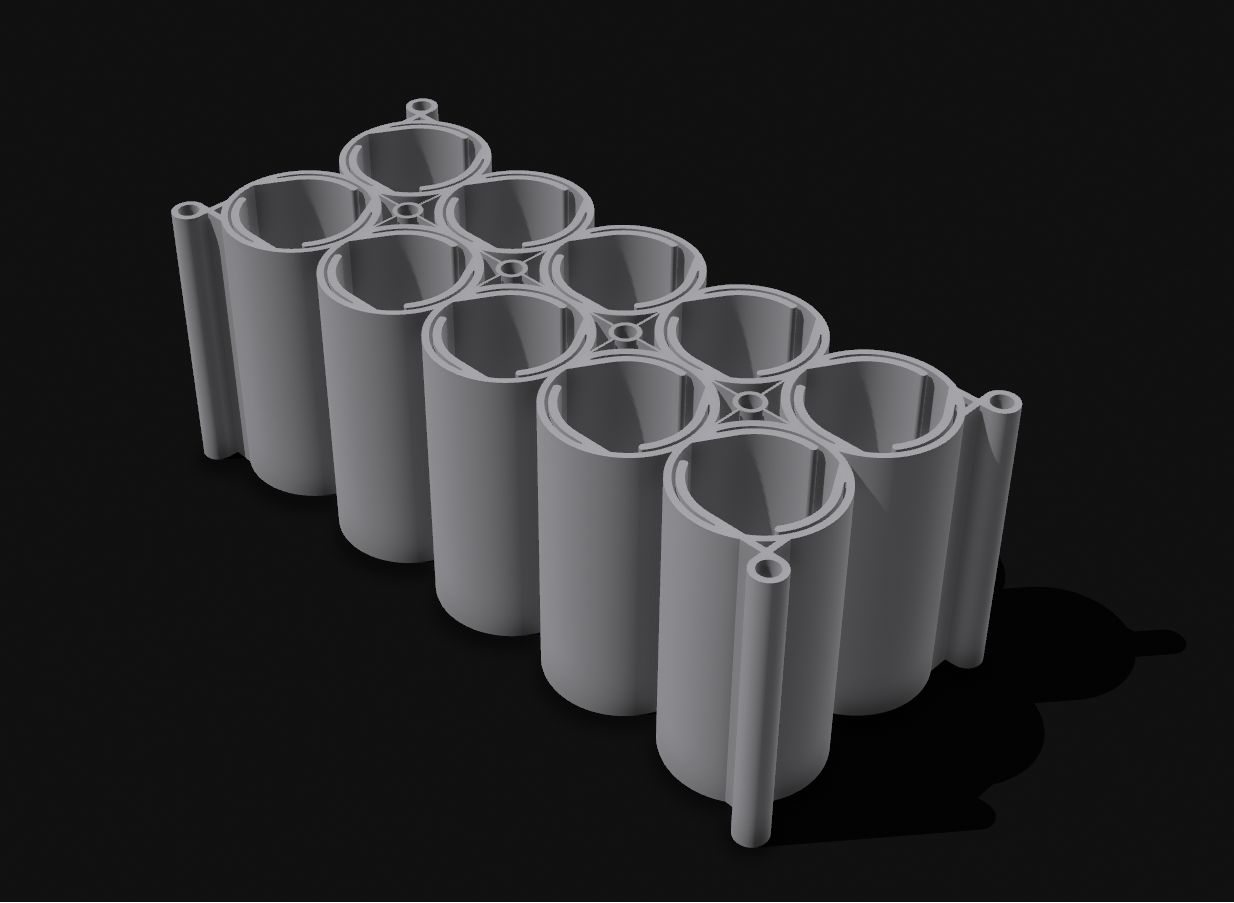
The build began with a basic CAD sketch to house the cells securely while offering space for wiring, a battery management system (BMS), USB-C ports, and a battery level indicator.
1. Case Design
Initial CAD design for the battery pack enclosure, scaled to hold multiple 18450 cells.
2. Cell Insertion & Copper Wrapping
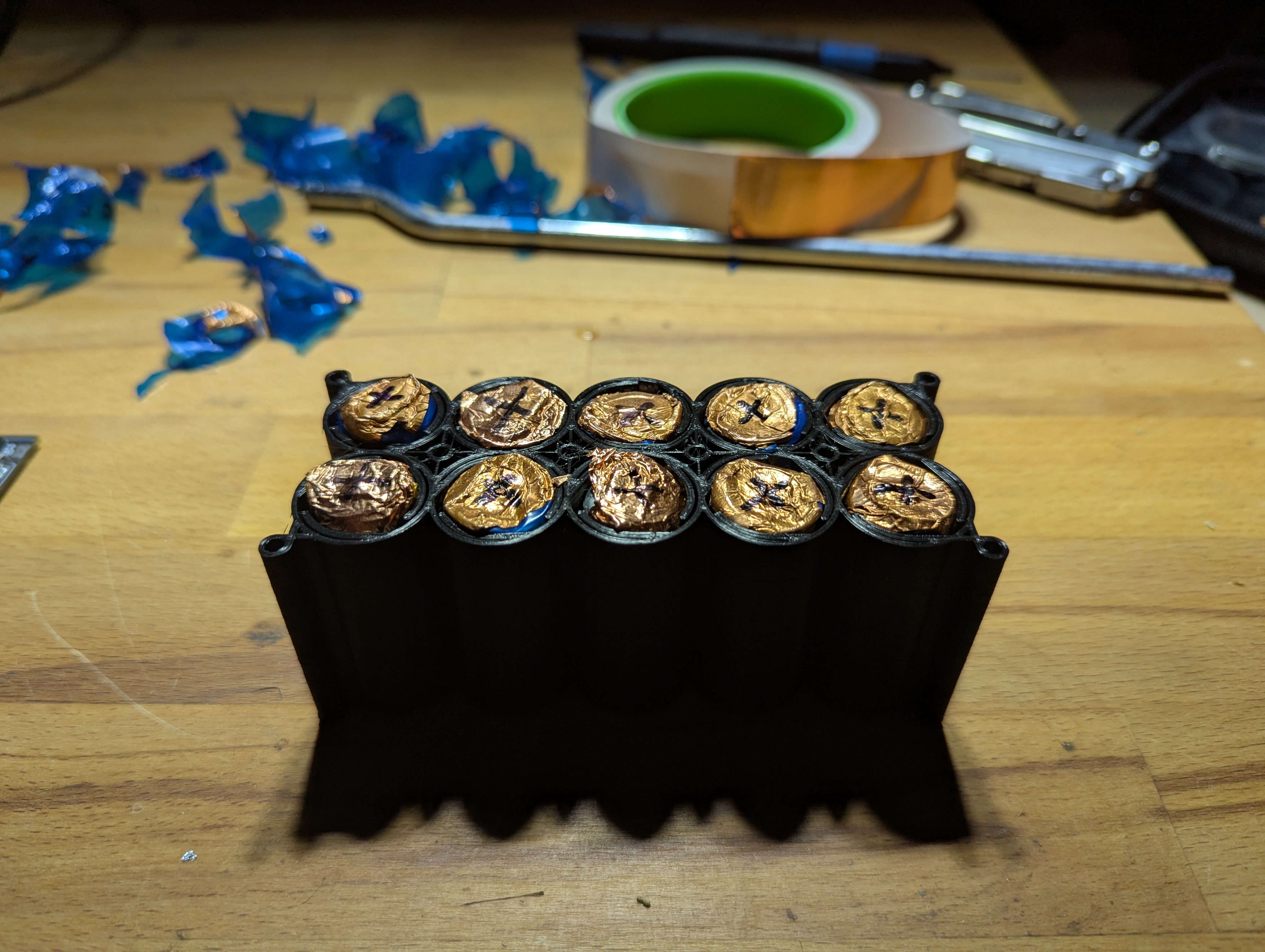
Used ten 18450 Li-ion cells salvaged from disposable vape units. Cells were inserted into the case with their positive and negative ends aligned consistently. Copper tape was applied along both edges of the battery pack to allow current distribution and simplify spot welding.
3. Spot Welding & BMS Integration
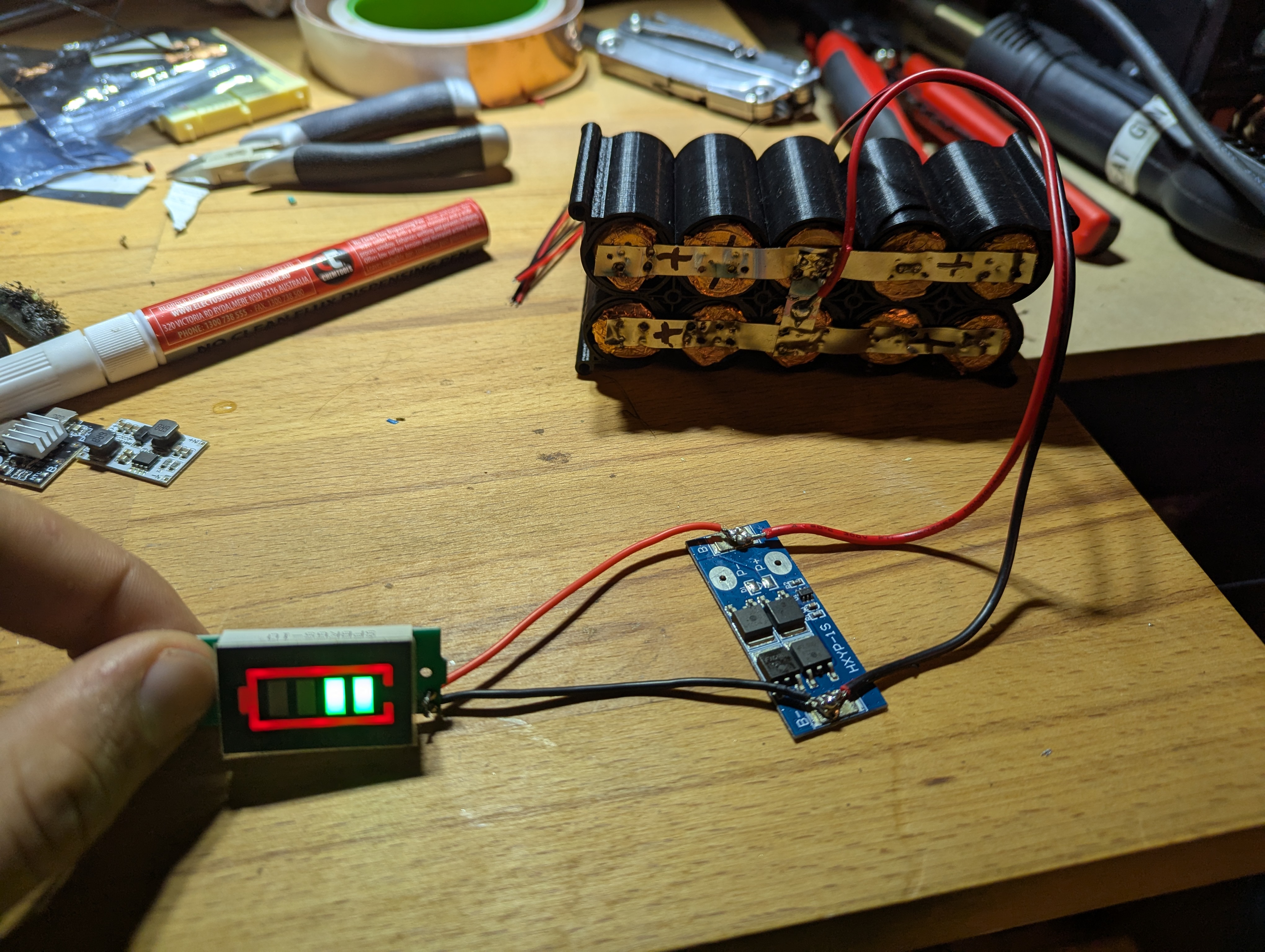
- Cells were connected in parallel (10P) for a combined 3.7V @ 14,000mAh.
- Copper tape formed the main bus along both edges.
- Nickel strips were spot welded across common terminals.
- A Battery Management System (BMS) was attached to manage charge/discharge safety.
- USB-C input was connected through a buck converter to safely charge the pack.
4. USB & Indicator Wiring
- A basic battery level indicator module was added with LED display.
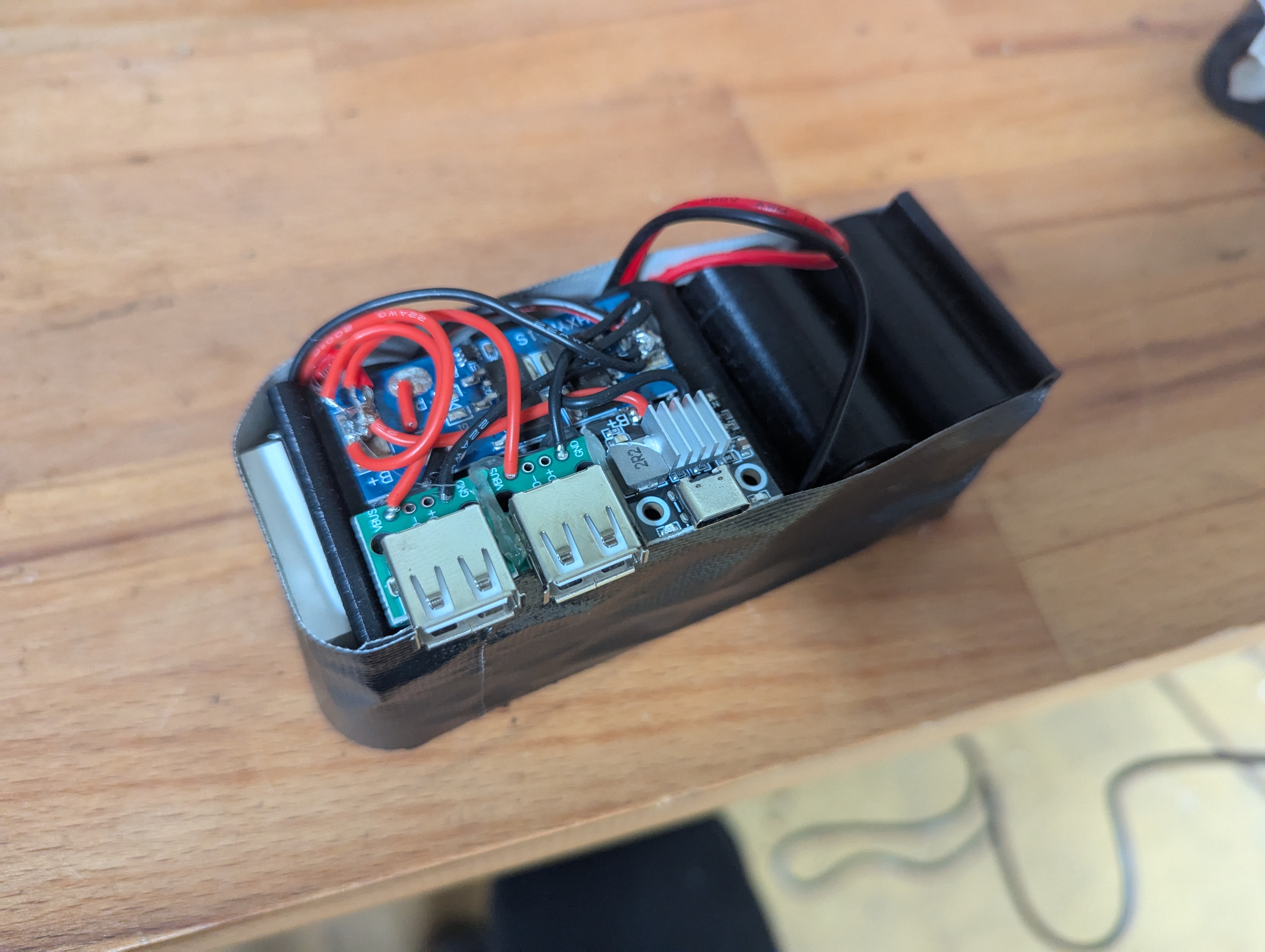
- USB-C input and output ports were added via a buck and buck-boost converter combo.
- Hot glue was used to reinforce the modules, preventing movement or shorts.
- Wires were stripped, twisted, tinned, and soldered carefully to pads on the modules and battery tabs.
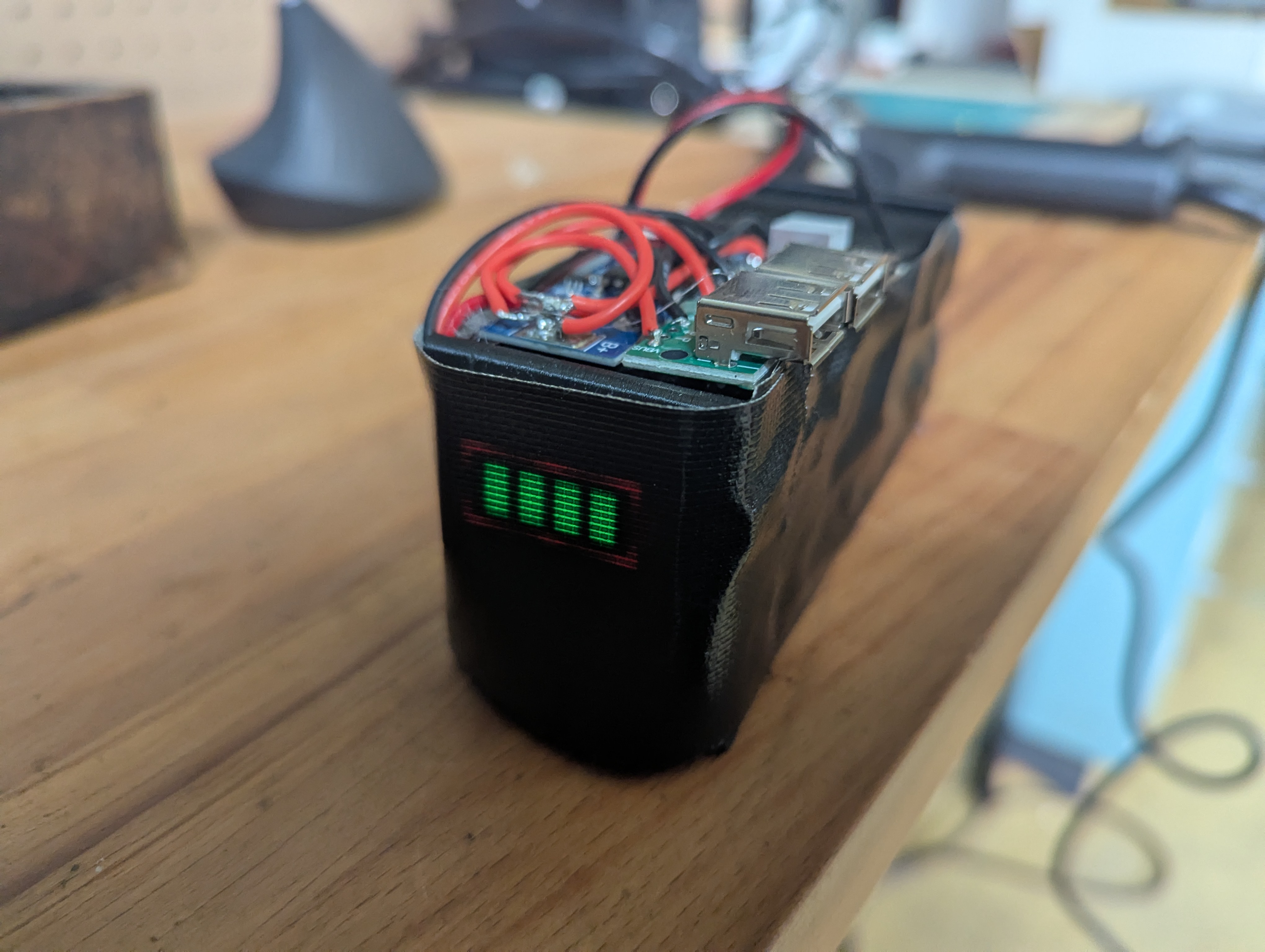
5. Finished Pack
- The top of the case was closed and secured.
- Duct tape was wrapped around the entire unit to stabilize components (a temporary solution for this prototype).
- Successfully tested with 5V LED camping lights.
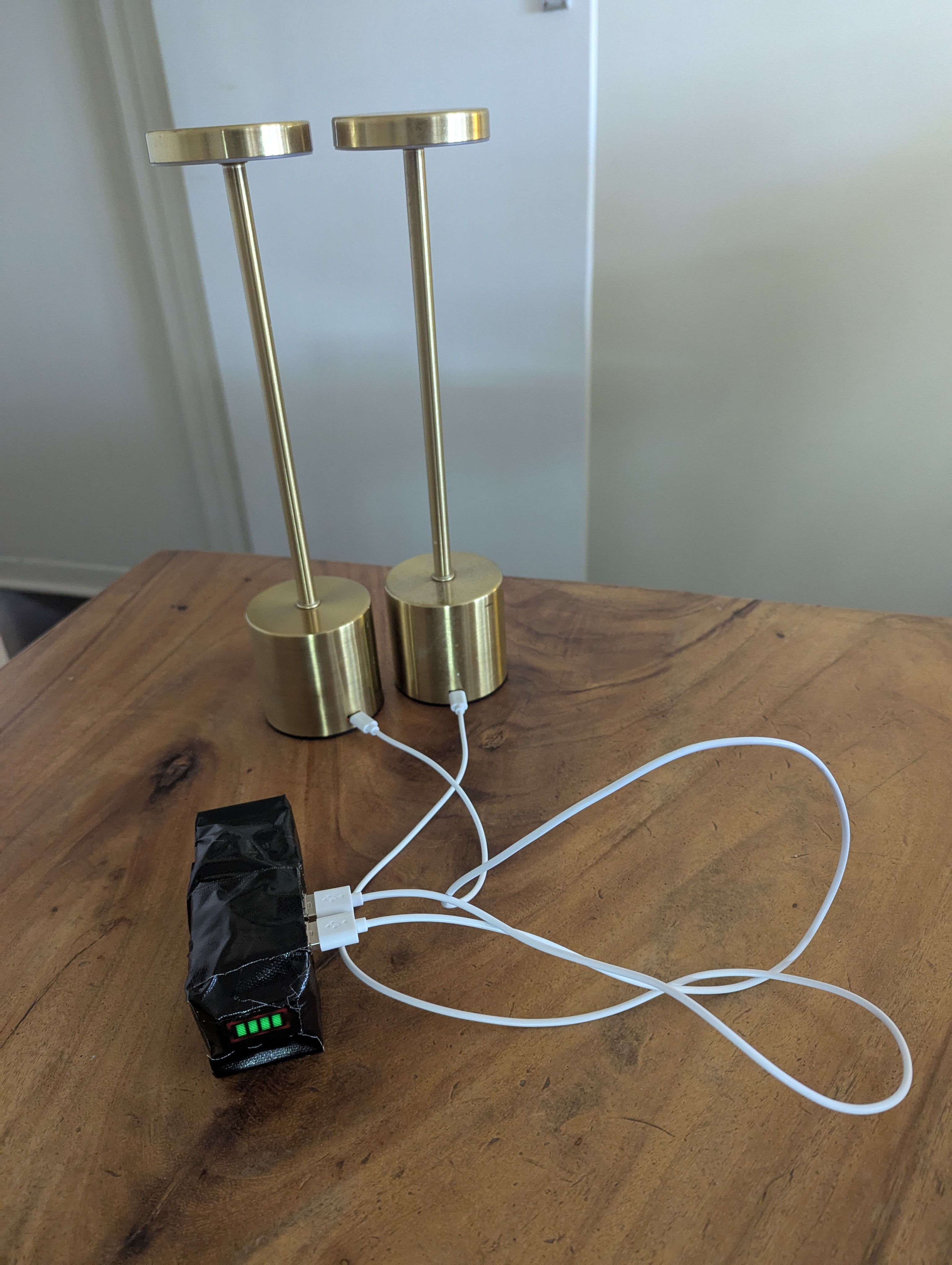
⚙️ Battery Specifications
| Specification | Value |
|---|---|
| Battery Model | IGET 18450 S50 |
| Battery Type | Lithium-Ion (Li-ion) |
| Nominal Voltage | 3.7V |
| Capacity (per cell) | 1400mAh |
| Total Capacity (10P) | ~14,000mAh (14Ah) |
| Energy | ~51.8Wh |
| Max Charge Voltage | 4.2V |
| Min Discharge Voltage | ~3.0V |
| Cell Dimensions | 18mm × 45mm |
| Cycle Life | ~300–500 cycles |
🔌 Parallel vs Series
Current Build: 10P Configuration
- Voltage: 3.7V (constant)
- Capacity: 14Ah (combined)
- Use Case: Long runtime, ideal for 3.7V devices (e.g. LED lighting)
Future Upgrade: 2S5P Configuration
- Voltage: 7.4V (nominal)
- Capacity: 7Ah
- Use Case: Enables better regulation to 5V or USB-PD levels for phone charging
🧰 Components List
| Component | Description |
|---|---|
| 18450 Li-ion Cells (10x) | Salvaged from disposable vapes |
| Copper Tape | Used to wrap and connect edges of cells |
| Nickel Strips | Spot welded to connect common terminals |
| Battery Management System | 3.7V BMS board for over/under-voltage protection |
| USB-C Input Board | Accepts charging input (5V) |
| Buck Converter | Steps down voltage for safe battery charging |
| USB Output Module | Provides 5V output (in this version, limited success) |
| Battery Indicator | Displays charge level |
| 3D Printed Enclosure | Custom-designed, to be upgraded in future |
| Hot Glue & Duct Tape | Used for rapid assembly and temporary housing |
💡 Learnings & Takeaways
- Boost Converters: Struggled to consistently convert 3.7V to 5V under moderate load. Most budget converters could not reliably supply phone charging currents.
- 2S Voltage Ideal: A 2S configuration (7.4V) is more suited for devices needing 5V output with proper regulation.
- Construction Trade-offs: Using copper tape allowed flexibility but introduced resistance and made spot welding tricky. Nickel strips will be used next time.
- Rapid Prototyping Works: Even with duct tape and glue, the battery performs well for lighting, validating the core concept.